

Lift Kits, Larger Tires, and Airbags: When Should You Recalibrate Your Trailer Hitch?
Posted by ProPride Hitch Team on 6th Aug 2026
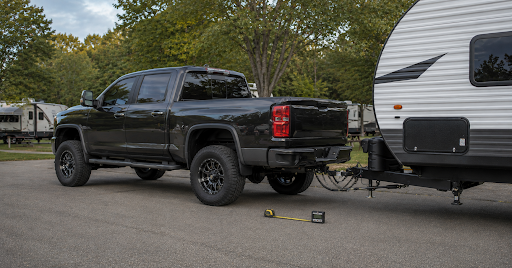
Truck owners frequently modify their vehicles before towing. Lift kits, leveling kits, larger tires, helper springs, and suspension airbags may improve appearance, ground clearance, or load support. However, these modifications can also change the height and geometry of the connection between the truck and travel trailer.
When the tow vehicle’s ride height changes, the hitch setup should be inspected again.
Why Receiver Height Matters
A weight distribution hitch is calibrated around the relationship between the tow vehicle’s receiver, the hitch head, the trailer coupler, and the trailer frame.
Raising the truck can position the receiver several inches higher than it was when the hitch was originally installed. Even larger-diameter tires can create enough of a height difference to affect how level the trailer sits.
A trailer that travels significantly nose-high or nose-low may place uneven loads on its axles and tires. It may also change how the weight distribution system transfers force back toward the tow vehicle’s front axle.
ProPride’s adjustable hitch bar offers multiple positions to accommodate different tow heights. Its tilt adjustment also helps keep the hitch head properly positioned for weight distribution.
Airbags Do Not Replace Weight Distribution
Suspension airbags can raise the rear of a loaded truck and reduce visible squat. That can make the vehicle appear level, but appearance alone does not confirm that the front axle has regained the proper amount of load.
Weight distribution and suspension support perform different jobs.
Airbags support the truck’s rear suspension. A weight distribution hitch uses leverage to distribute the trailer’s loaded hitch weight across the tow vehicle and trailer axles.
After changing air pressure, suspension height, or rear spring support, recheck the complete towing setup. ProPride’s own towing guidance notes that lift kits and aftermarket air suspension may require adjustments to hitch-head height and related setup measurements.
Larger Tires Require More Than a Visual Inspection
Larger or differently rated tires may affect vehicle height, handling, load capacity, and indicated speed. Always verify that the tires and wheels are approved for the vehicle and capable of supporting its loaded axle weights.
Tire pressure should be based on the vehicle manufacturer’s specifications, tire requirements, and actual load. Underinflation can reduce load support and contribute to poor handling and premature wear.
Do not use the hitch to compensate for an overloaded vehicle, an underrated tire, or a modification that conflicts with the tow vehicle manufacturer’s instructions.
When to Recalibrate Your Setup
Recheck your hitch whenever you:
- Install a lift or leveling kit.
- Change tire diameter.
- Add airbags or helper springs.
- Replace the tow vehicle’s rear suspension.
- Change receiver components.
- Move the hitch to another truck.
- Notice that the trailer no longer travels level.
Begin with the truck and trailer loaded for a normal trip. Measure the trailer coupler height while the trailer is level, then compare it with the tow vehicle’s receiver height.
After connecting the trailer, measure the front and rear of the truck. Adjust the hitch bar position and weight distribution according to ProPride’s installation instructions and the tow vehicle manufacturer’s requirements.
A suspension modification does not necessarily prevent you from using a ProPride 3P® Hitch. It simply means the towing system should be treated as a new combination.
Whenever the height or suspension of the truck changes, old measurements should no longer be assumed correct. Recalibrating the setup helps ensure the trailer travels level, the front tires remain properly loaded, and the entire combination performs as intended.